
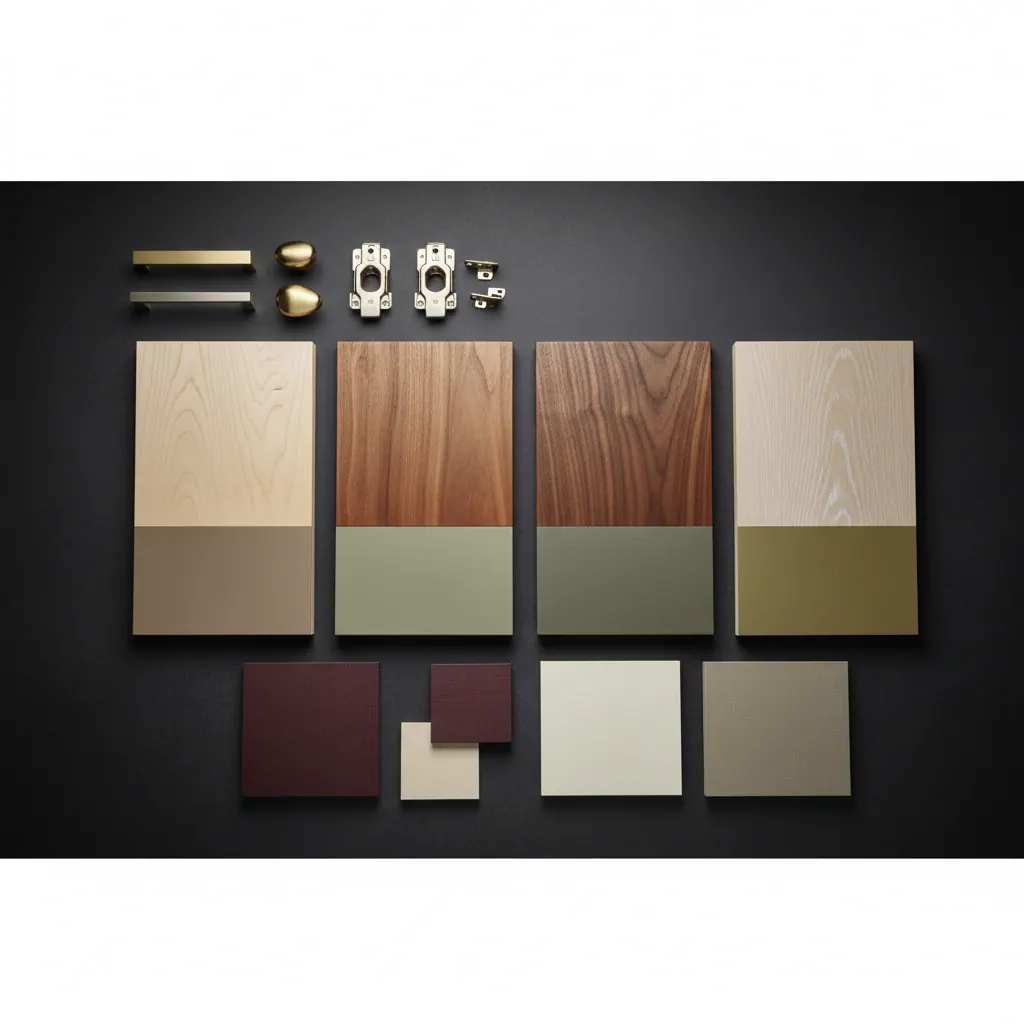
Understanding Cabinet Materials
Choosing the right material for your kitchen cabinets is one of the most important decisions you will make. The material affects durability, appearance, moisture resistance, cost, and how well your cabinets will age over time. At Custom Cabinets Brampton, we work exclusively with solid Canadian hardwoods and quality engineered materials. Understanding the differences helps you make the right choice for your kitchen.
Solid Wood Cabinets
What Is Solid Wood?
Solid wood cabinets are made from 100% wood throughout the cabinet construction, including frame, sides, doors, and shelves. No plywood or engineered materials are used.
Advantages
- Longevity: Solid wood cabinets last 30-50+ years with proper care.
- Durability: Solid wood is stronger and more resistant to damage than engineered materials.
- Repairability: Dents, scratches, and damage can often be sanded and refinished.
- Beauty: Natural wood grain and character add warmth and elegance to kitchens.
- Moisture Resistance: Quality hardwoods handle humidity variations better than MDF.
Disadvantages
- Cost: Solid wood is the most expensive cabinet option.
- Environmental Impact: Requires harvesting trees (though Canadian hardwoods are sustainably sourced).
- Weight: Solid wood cabinets are heavier and may require additional wall support.
Best For
Homeowners prioritizing longevity, durability, and natural beauty. Ideal for kitchens that will be used heavily and updated infrequently.
Plywood Cabinets
What Is Plywood?
Plywood is an engineered material made from layers of wood veneer glued together with grain direction alternating. It is used for cabinet sides, backs, and shelves, while solid wood is used for frame and doors.
Advantages
- Stability: Plywood resists warping and swelling better than solid wood.
- Strength: The cross-grain construction creates structural strength comparable to solid wood.
- Cost-Effective: Plywood is less expensive than solid wood while remaining high-quality.
- Moisture Resistance: Quality plywood handles humidity changes well.
- Sustainability: Uses less wood and less waste than all-solid construction.
Disadvantages
- Repair Difficulty: Interior plywood cannot be refinished if damaged.
- Edge Banding: Plywood edges require edge banding material for a finished appearance.
- Longevity: May not last quite as long as all-solid construction in extreme conditions.
Best For
Most homeowners. Plywood offers an excellent balance of quality, durability, cost, and sustainability. Our standard choice at Custom Cabinets Brampton.
MDF (Medium-Density Fibreboard)
What Is MDF?
MDF is an engineered wood product made from wood fibres, sawdust, and resin compressed into dense panels. It is painted or veneer-faced.
Advantages
- Affordable: MDF is the least expensive cabinet option.
- Flat Surface: Provides an excellent surface for paint finishes.
- No Grain Variation: Consistent appearance across cabinets.
- Paint Durability: Paint adheres excellently to MDF.
Disadvantages
- Moisture Sensitivity: MDF absorbs water and swells. Not recommended for kitchens with high humidity.
- Durability: MDF is softer and more prone to denting and damage than solid wood or plywood.
- Longevity: Typically lasts 10-15 years before degradation begins.
- Repairability: Dents and damage cannot be repaired; the affected piece must be replaced.
- Environmental Impact: Contains formaldehyde adhesives (though low-formaldehyde options exist).
Best For
Budget-conscious buyers seeking painted cabinets in dry climates. Not recommended as primary material for kitchen construction at Custom Cabinets Brampton.
Canadian Hardwood Species
Maple
Characteristics: Light colour, fine, uniform grain, extremely hard and durable.
Cost: Mid-range ($200-$300 per linear foot)
Best For: Traditional and contemporary styles. Takes stain beautifully. Excellent durability.
Birch
Characteristics: Light colour, straight grain, moderately hard, affordable.
Cost: Most affordable ($150-$200 per linear foot)
Best For: Budget-conscious projects without sacrificing quality. Handles paint and stain well.
Cherry
Characteristics: Rich reddish-brown colour, fine grain, moderately hard.
Cost: Mid-premium ($250-$350 per linear foot)
Best For: Traditional and transitional kitchens. Develops a beautiful patina with age.
Walnut
Characteristics: Dark brown with purple tones, dramatic grain, hard, luxurious appearance.
Cost: Premium ($300-$400+ per linear foot)
Best For: Contemporary and modern styles. Creates stunning visual impact. Most durable option.
Material Comparison Table
| Material | Durability | Moisture Resistance | Cost | Lifespan |
|---|---|---|---|---|
| Solid Hardwood | Excellent | Excellent | High | 30-50+ years |
| Plywood | Excellent | Very Good | Mid-Range | 25-40 years |
| MDF | Fair | Poor | Low | 10-15 years |
Our Recommendation
At Custom Cabinets Brampton, we recommend solid Canadian hardwood with quality plywood box construction. This combination provides:
- Maximum durability and longevity (25-50 years)
- Superior moisture resistance
- Beautiful natural appearance with excellent aging characteristics
- Repairability if minor damage occurs
- Excellent value for the quality received
We do not use MDF in our cabinet construction due to its limited lifespan and poor moisture resistance in kitchens.
Caring for Your Cabinet Materials
Regardless of material choice, proper care extends cabinet life:
- Wipe up spills immediately to prevent moisture absorption
- Use mild soap and water for cleaning; avoid harsh chemicals
- Avoid excessive moisture from steam or direct water contact
- Periodically apply wood conditioner to maintain finishes
- Use cabinet handles and knobs to avoid hand oils on finishes
- Keep kitchen humidity between 30-50% for optimal wood stability